Interview Cheating Tools Can Answer Anything. Except “Why?”
AI can answer textbook interview questions in seconds. It can’t answer questions about the candidate’s own work. Here’s how to ask those.
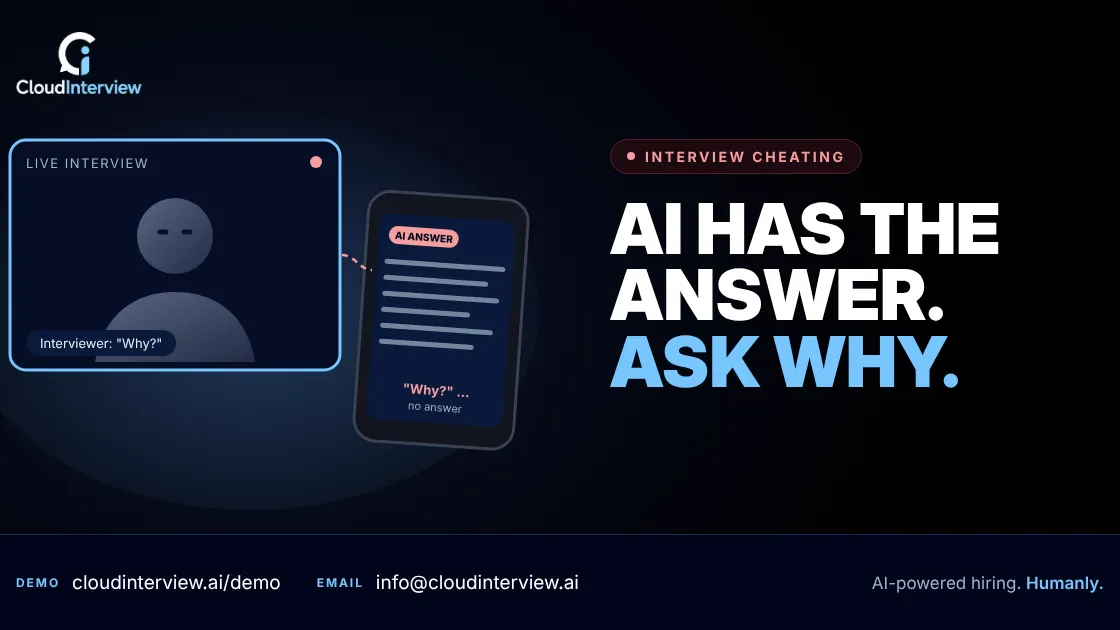
Picture this. You ask a candidate, "What's the difference between a list and a tuple?" They pause for two seconds. Then they give you a perfect answer. Clean, calm, word for word like a textbook.
Great answer. But was it theirs?
That's the thing about interview cheating today. We spend a lot of energy worrying about the tools candidates use. But most of the time, the real problem is the questions we ask.
If a question has one "right" answer you can look up, an AI app can answer it in seconds. The candidate just reads it out loud. And it's not rare. In a 2026 Resume Genius survey of U.S. hiring managers, 46% said they've seen candidates use AI to answer interview questions. And 28% have caught people using AI on online skills tests (Resume Genius).
Here's the good news. You don't need to see a candidate's second screen. You just need questions AI can't answer for them. Let's fix that.
The short version
- AI is great at textbook questions. It's bad at questions about someone's own life and work.
- So ask about the person, not about facts.
- Always follow up on what they just said.
- Tell candidates your AI rules before the interview. Most people follow clear rules.
In this guide
- How interview cheating works today
- Why some questions are easy to cheat
- 3 rules for AI-proof questions
- Before and after: rewriting common questions
- Signs someone is reading AI answers
- Should you ban AI in interviews?
- How CloudInterview helps
- FAQs
How interview cheating works today
Cheating in interviews used to mean a friend whispering answers. Now it's mostly apps, and they're easy to get.
Here's what you might be up against:
- AI answer apps. They listen to the call and show an answer on the screen while you're still talking.
- A second device. A phone or laptop sitting just out of view of the camera.
- A helper in the room. Someone off-screen who listens and types answers.
- A stand-in. A different person takes the interview. (We wrote about this in Proxy Interview: 5 Gaps Where Stand-Ins Slip Through.)
Some people go even further and use deepfakes. In the same survey, 17% of hiring managers said they've seen deepfakes in video interviews. If that worries you, here's how to catch deepfake job candidates.
Why some questions are easy to cheat
Think about the questions AI handles best:
- Definitions: "What is a REST API?" "What is a pivot table?"
- Textbook steps: "How would you handle an upset customer?"
- Common puzzles: coding tests and brain teasers that are all over the internet.
The answers to all of these are already online. The AI just finds them and says them back.
Now think about what AI can't do. It wasn't there when the candidate stayed late to fix that bug. It wasn't on the call when they calmed down that angry customer. It doesn't know which deal they lost and what they learned from it.
Only the candidate knows that. So that's what you should ask about.
3 rules for AI-proof questions
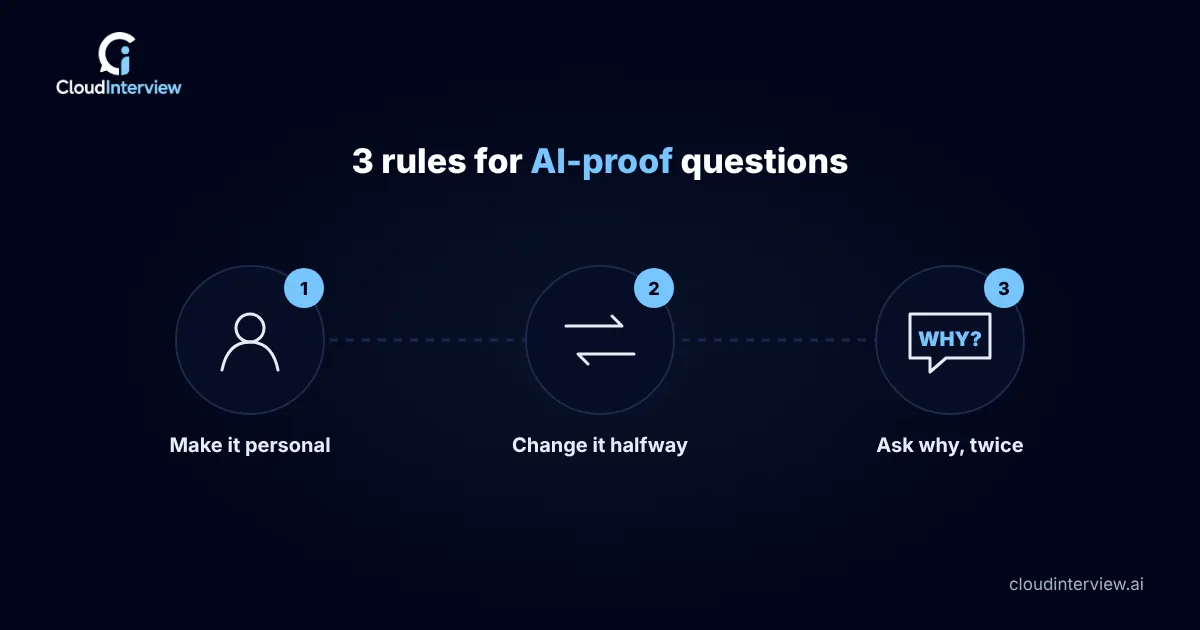
1. Make it personal. Ask about something they really did. "Tell me about a time you…" is a good start. Then go small. What tool were they using? Who did they call first? What went wrong? Real people remember these details. AI has to guess.
2. Change it halfway. Once they answer, change one thing. "Okay, now your budget is cut in half. What do you do?" A cheat sheet can't keep up with a question that keeps moving.
3. Ask "why," then ask it again. AI gives neat, confident answers. Real people are messier. They talk about mistakes, trade-offs and things they'd do differently. Asking "why" twice brings that out. And honestly, it's where you learn the most about a candidate anyway.
Before and after: rewriting common questions
| Easy to cheat | AI-proof version |
|---|---|
| "What is a REST API?" | "Tell me about an API you built. What would you change if you did it again?" |
| "How do you handle an upset customer?" | "Tell me about your toughest customer call. What did you say first?" |
| "What makes a good sales pitch?" | "Pitch me the last thing you sold. Now I say it costs too much. Go." |
| "How do you prioritize tasks?" | "What did you drop last week to hit a deadline? Why that one?" |
| "What is a pivot table?" | "Show me a report you made. Which number surprised your boss most?" |
See the pattern? The AI-proof version asks about their work. And it opens the door to a follow-up.
Signs someone is reading AI answers
First, a fair warning. One sign on its own means nothing. Some people pause to think. Some look away when they focus. Nerves make everyone a little strange.
But when you see a few of these together, it's worth a closer look:
- A pause after every question, even easy ones, then a fast, smooth answer
- Eyes moving side to side, like they're reading
- Answers that sound like a blog post, full of buzzwords
- Vague answers about their own work
- Trouble with "why" or with a follow-up that changes the question
If you notice this, don't accuse anyone. Just keep asking personal follow-ups. The truth usually comes out on its own, and you stay fair to the honest candidates.
Should you ban AI in interviews?
You don't have to ban it. But you do need a clear rule. A lot of candidates really don't know what's allowed, and that's on us, not them.
Here's a simple line you can copy into your interview invite:
"In our interviews, please answer in your own words, without AI tools or outside help. It's fine to use AI to prepare beforehand. If a task allows tools, we'll tell you."
Then treat everyone the same. Same rules, same kinds of questions and the same follow-ups for everyone applying for the same job.
How CloudInterview helps
We built CloudInterview around the kind of questions AI can't answer for you.
- AI Interviews ask follow-up questions based on each candidate's answer, so nobody can lean on a script. Every interview is recorded and scored, so you can compare answers side by side.
- Interview Outsourcing adds a live interview with an expert in the role. An expert who asks "why" twice is very hard to fool with an AI app.
Not sure which test fits which stage of hiring? Read Candidate Assessment Tools: Which One to Use at Each Hiring Stage.
AI for scale. Human experts for judgment.
Better questions beat better spy tools
You'll never see every candidate's second screen. And you don't need to. Ask about their real work. Change the question. Ask "why."
AI can write a great answer. It can't live someone else's life.
Book a demo to see how CloudInterview's AI interviews ask follow-up questions a script can't answer. AI-powered hiring. Humanly.