Do Async Interviews Work for Senior Engineers?
One-way video rarely works for senior engineers. Here's when async interviews do work for senior roles, when to skip them, and a simple process that keeps judgment human.
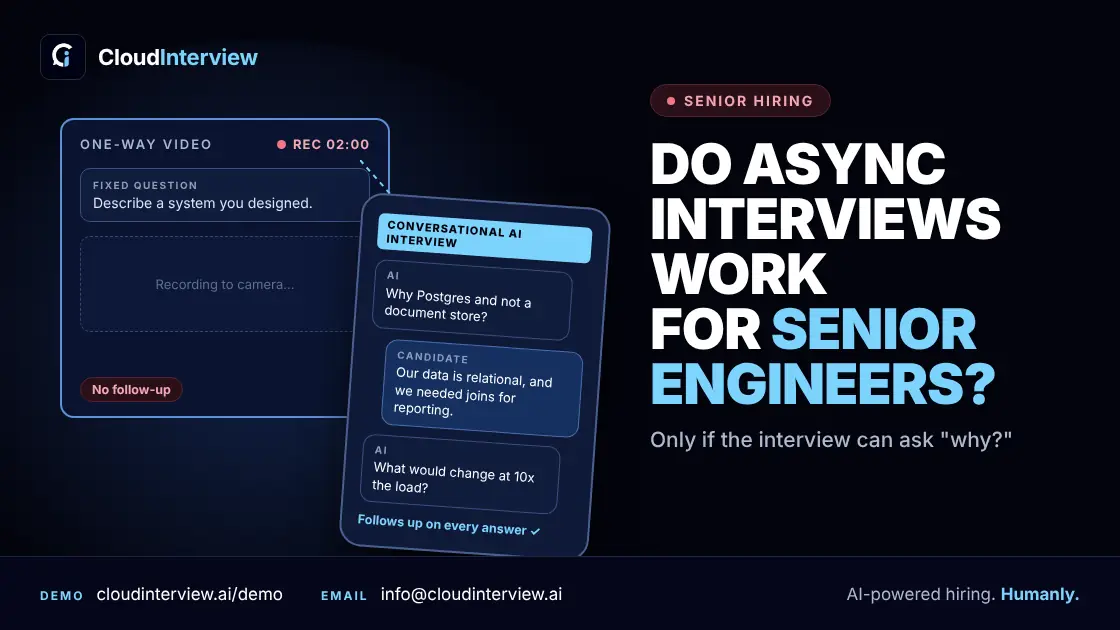
Short answer: recorded one-way video interviews usually don't work well for senior engineers. Async interviews that hold a real conversation, with follow-up questions, can work for the first round, as long as a person runs the rounds that decide the hire.
The difference is the follow-up. Senior skill shows up in "it depends." A fixed question with a two-minute timer can't ask "why?"
Why one-way video struggles with senior candidates
- Candidates accept it less. Research shows asynchronous video interviews are less accepted by applicants than face-to-face interviews. In the same study, older participants accepted video interviews less. Age isn't seniority, but senior engineers are usually further into their careers.
- It feels like talking to a wall. A 2024 study found async video interviews tend to get negative applicant reactions, possibly because they feel less personal than other formats.
- It can't follow up. A senior engineer's best answer often starts with a question back. One-way video has no one to ask.
- It sends the wrong signal. Senior people are often being recruited. Asking them to record answers to a camera first can feel like a filter, not a conversation.
What a senior engineering interview needs to test
- Trade-offs: why this approach and not another, and what it costs
- System design: at the right depth for the role
- Ownership: an incident they handled, or a decision they would make differently now
- Communication: how they explain a technical choice to someone who isn't an engineer
None of these fit into a short recorded answer. They all need someone, or something, that can ask the next question.
When async can work for senior roles
- It's conversational. The interview follows up on what the candidate actually said.
- It's short and focused. Twenty to thirty minutes on one or two real problems, not ten generic questions.
- You explain it upfront. Tell candidates why you use it and who reviews it. In the same research, explaining the format's consistency and flexibility improved how fair candidates found it.
- A person reviews every interview. No one is rejected without a human looking at their answers.
- The candidate picks the time. That flexibility matters to people who already have demanding jobs.
When to skip async entirely
- Staff, principal and engineering leadership roles
- Small, hand-picked shortlists, such as referrals or candidates you approached yourself
- Any candidate you are actively trying to win over
For these, go straight to a live conversation with a senior engineer or the hiring manager.
A simple process for senior engineering hires
| Stage | Format | Who runs it |
|---|---|---|
| First round | Conversational AI interview with follow-up questions | AI, reviewed by your team |
| Deep technical round | Live, focused on design and trade-offs | A senior engineer or a vetted outside expert |
| Final round | Live | The hiring manager and team |
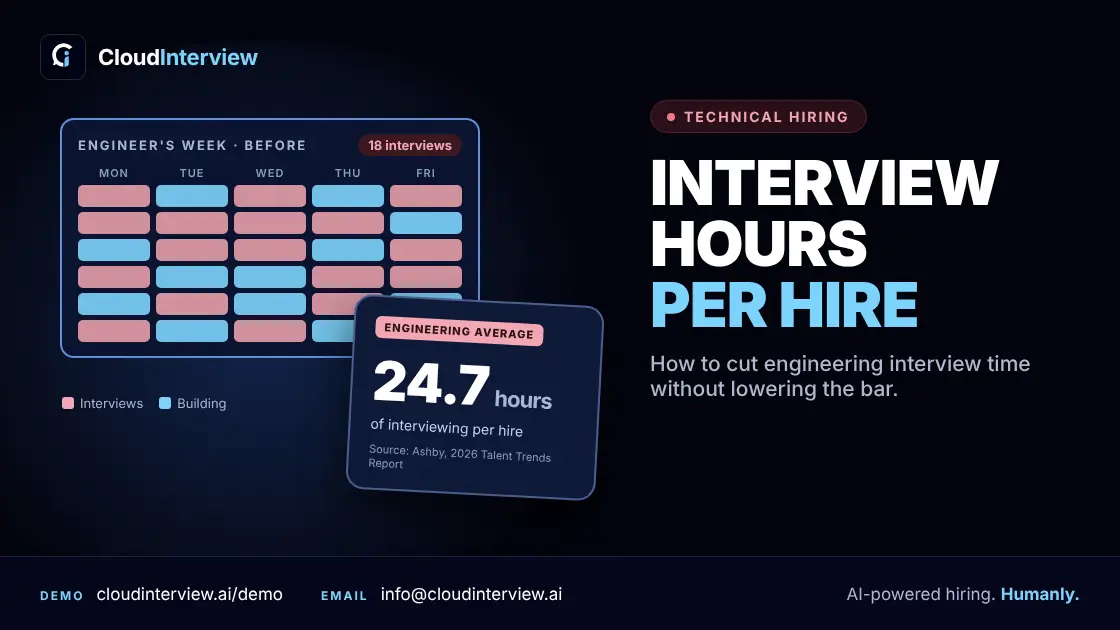
This keeps the first round consistent and flexible, and keeps people in charge of the rounds that need judgment. It also saves engineering time. See interview hours per hire for the math.
How CloudInterview helps
- AI Interviews: a video or voice interview that asks follow-up questions based on each answer, with live coding and test runs. You get scores, transcripts and recordings, and candidates take it at a time that suits them.
- Interview Outsourcing: a vetted expert runs the deep technical round and scores it on a structured scorecard, with a recording you can review.
New to the format? Start with what an asynchronous interview is and how async AI interviews work.
Hiring senior engineers this quarter? Book a demo or start free.